

About the SuSI Summit 2026
SuSI Summit 26 – Sustainable Semiconductor Innovations Summit – is a one-day, high‑level conference dedicated to driving sustainability across the entire semiconductor value chain. Following a successful first edition, the 2026 summit at Infineon Campeon in Neubiberg / Munich brings together industry leaders, associations, academia, and policy makers from across Europe. Under the theme “Exploring ways to Chiptainability”, SuSI Summit 26 showcases cutting‑edge ideas on sustainable chip design, carbon reduction, twin transformation, and circularity. As a proven spillover event for IPCEI ME/CT, it provides a focused platform for expert exchange, collaboration, and practical solutions.
Who should attend?
- Executives and Decision-makers: Gain strategic insights into sustainable trends shaping semiconductor manufacturing.
- Engineers and Researchers: Discover innovative technologies and approaches for sustainable production and design.
- Policymakers and Regulators: Understand critical policy developments and regulatory frameworks affecting the semiconductor sector.
- Investors and Stakeholders: Explore investment opportunities and network with key industry players advancing semiconductor sustainability.
Why you should attend
After attending the SuSI Summit you will have:
- A clear understanding of current best practices and future trends in different aspects of sustainable semiconductor manufacturing.
- Concrete insights into new technologies and innovative solutions that drive sustainability in chip manufacturing.
- Valuable contacts with industry leaders, start-ups and policy makers.
- Actionable knowledge about regulatory developments that directly influence your strategic decisions.
Agenda
Spanning innovation, materials, manufacturing, and digital transformation, the day explores how the semiconductor industry is turning sustainability into a tangible, measurable advantage. From integrating digital and green strategies, to moving beyond carbon reporting toward real emissions reduction, sessions will highlight practical approaches to building more transparent, resilient, and low-impact supply chains. You’ll also discover advances in sustainable materials, cleaner production technologies, and smart manufacturing solutions that reduce waste while improving yield. Together, these perspectives showcase how sustainability is no longer a parallel effort, but a core driver of performance, value creation, and long-term competitiveness.
08:00
Morning coffee and accreditation
09:00
Welcome and Opening of the Susi Summit 2026
Corinna Wolf
Vice President, Head of Global Sustainability, Human Rights Officer - Infineon Technologies
Stefan Wunderer
Science Leader & Sustainability Expert - Nokia
Innovation Paths
09:30
Chiptainability - The Journey from Less Harm to More Life
Stefan Wunderer
Science Leader & Sustainability Expert - Nokia
For decades, sustainability in technology has focused on reducing environmental footprints and doing less harm. But what if the true opportunity lies beyond sustainability itself? This keynote introduces chiptainability, a vision for the evolution from footprint reduction to positive handprint creation and ultimately to regenerative systems. Drawing on advances in semiconductor innovation, systems thinking, and emerging sustainability paradigms, it explores how chips can become enablers of resilience, circularity, and ecological renewal. The challenge for the next generation of technology is no longer simply to minimize impact, but to create conditions in which people, economies, and living systems can thrive together. The journey is no longer from less bad to better, but from less harm to more life.
09:50
From Sustainable Fabs to Circular Healthcare: Semiconductor Innovation for a Sustainable Future
Franziska Lindner
Staff Specialist Quality Management System - Infineon Technologies
Theresa Seeholzer
PhD Candidate in Sustainable Electronics & LCA Researcher - Infineon Technologies / University of Freiburg - INATECH
Sustainability must be embedded across the entire semiconductor value chain from the very first decision. This joint presentation highlights two examples of how Infineon is turning this ambition into reality.
The first part explores the Smart Power Fab in Dresden, designed to “Leadership in Energy and Environmental Design” (LEED) standards and supporting Infineon’s Climate ambition through resource-efficient manufacturing and optimized use of energy and water. The second part showcases a 9R circular economy-guided wearable sensing platform for chronic wound monitoring. By combining circular design principles, Life Cycle Assessment, multimodal electrochemical sensing, and highly integrated semiconductor technology, the platform demonstrates the potential to reduce CO₂ emissions by up to 70% compared to standard care.
Together, these examples illustrate how semiconductor innovation can create environmental and societal value, from sustainable manufacturing to next-generation healthcare solutions.
The Smart Power Fab is funded by the European Union, the Federal Republic of Germany and the Free State of Saxony. Sponsors: European Union NextGenerationEU, Federal Ministry for Economic Affairs and Energy based on a resolution of the German Bundestag and the Saxon State Ministry for Economic Affairs, Labour, Energy and Climate Protection.
The smart wound monitoring was carried out as part of SUSTRONICS project that is co-funded by the European Union under grant agreement 101112109 and the BMFTR.
The first part explores the Smart Power Fab in Dresden, designed to “Leadership in Energy and Environmental Design” (LEED) standards and supporting Infineon’s Climate ambition through resource-efficient manufacturing and optimized use of energy and water. The second part showcases a 9R circular economy-guided wearable sensing platform for chronic wound monitoring. By combining circular design principles, Life Cycle Assessment, multimodal electrochemical sensing, and highly integrated semiconductor technology, the platform demonstrates the potential to reduce CO₂ emissions by up to 70% compared to standard care.
Together, these examples illustrate how semiconductor innovation can create environmental and societal value, from sustainable manufacturing to next-generation healthcare solutions.
The Smart Power Fab is funded by the European Union, the Federal Republic of Germany and the Free State of Saxony. Sponsors: European Union NextGenerationEU, Federal Ministry for Economic Affairs and Energy based on a resolution of the German Bundestag and the Saxon State Ministry for Economic Affairs, Labour, Energy and Climate Protection.
The smart wound monitoring was carried out as part of SUSTRONICS project that is co-funded by the European Union under grant agreement 101112109 and the BMFTR.
10:10
New Business Models for a Sustainable Semiconductor Industry
Prof. Dr. Henning Breuer
Innovation Consultant, Professor & Author - UxBerlin
Recent research on Sustainable Business Model Design (Stanford University Press, 2026) and Sustainable Innovation Cultures (De Gruyter, 2026) reveals significant opportunities for semiconductor companies to turn sustainability challenges into drivers of innovation, resilience, and competitive advantage.
Proven sustainable business model design patterns already applied in the industry include Sustainable Product Design, Remanufacturing and Resource Efficiency and Productivity. Precursors to advanced patterns, like Pay-for-Success, Green Razor and Blade or Online Waste Exchange Platform, open opportunities for novel circular combinations. Emerging approaches, including Ecosystem Orchestration, Result-Oriented Services and Regeneration, create new pathways to decouple growth from resource consumption while generating ecological, social, and economic value.
While sustainable business model innovation may begin with a dedicated strategy, project, or technology, lasting transformation requires a generative innovation culture. Sustainable Innovation Cultures draw on proven practices and methods to embed sustainability values into everyday decisions and collaboration structures, enabling measurable impact and continuous adaptation. Drawing on lessons from leading companies across industries, this session explores practical pathways for advancing sustainable business models and innovation cultures across the semiconductor sector.
Proven sustainable business model design patterns already applied in the industry include Sustainable Product Design, Remanufacturing and Resource Efficiency and Productivity. Precursors to advanced patterns, like Pay-for-Success, Green Razor and Blade or Online Waste Exchange Platform, open opportunities for novel circular combinations. Emerging approaches, including Ecosystem Orchestration, Result-Oriented Services and Regeneration, create new pathways to decouple growth from resource consumption while generating ecological, social, and economic value.
While sustainable business model innovation may begin with a dedicated strategy, project, or technology, lasting transformation requires a generative innovation culture. Sustainable Innovation Cultures draw on proven practices and methods to embed sustainability values into everyday decisions and collaboration structures, enabling measurable impact and continuous adaptation. Drawing on lessons from leading companies across industries, this session explores practical pathways for advancing sustainable business models and innovation cultures across the semiconductor sector.
10:30
Coffee & Exhibition & Networking
Technology Paths
11:15
Molybdenum and Tungsten for a Greener Semiconductor Future: Plansee’s Path to Sustainable Materials
Dr. Christoph Adelhelm
Business Development Manager - Plansee
Plansee is a leading manufacturer of molybdenum and tungsten products, supplying essential materials for various semiconductor manufacturing processes – including EUV lithography, ion implantation, and components such as sputtering targets or ion beam grids used in thin film deposition and etching.
This talk will highlight concrete examples of how we are implementing our sustainability goals across operations. These include scaling up green hydrogen production or collaborating with customers on refurbishment initiatives to increase the share of reused products. In addition, product innovation and people development are discussed.
A strategic backbone of the Plansee Group is its extensive backward integration in raw material supply. Built on two pillars – secured access to raw materials and in-house processing and recycling capabilities – this integration ensures independence from supply constraints and enhances the sustainability of our value chain.
This talk will highlight concrete examples of how we are implementing our sustainability goals across operations. These include scaling up green hydrogen production or collaborating with customers on refurbishment initiatives to increase the share of reused products. In addition, product innovation and people development are discussed.
A strategic backbone of the Plansee Group is its extensive backward integration in raw material supply. Built on two pillars – secured access to raw materials and in-house processing and recycling capabilities – this integration ensures independence from supply constraints and enhances the sustainability of our value chain.
11:35
Enabling Low‑Emission Polysilicon Etching: NOx Reduction via DeNOx Technology
Lisa Wagner
Process Development Engineer - Wacker
This work presents an integrated DeNOx approach to enable low‑emission polysilicon etching operations. A key challenge in silicon etching arises from batch‑wise immersion and removal of silicon from the etching solution, which induce highly dynamic process conditions and sharp NOx concentration gradients in the exhaust gas. These transients place significant demands on downstream abatement systems. To address this, advanced real-time NOx measurements were implemented upstream of the DeNOx catalyst, enabling fast response times and high‑resolution monitoring of rapidly changing emission profiles. Catalyst operation was further optimized through improved gas mixing, ensuring uniform flow distribution and full utilization of the active catalyst surface. In parallel, an enhanced control concept, including Advanced Process Control (APC), was deployed to proactively manage load changes and stabilize catalyst performance under dynamic conditions. The combined measures resulted in a substantial and sustained reduction of NOx emissions while increasing etching productivity, demonstrating a scalable pathway toward environmentally optimized polysilicon manufacturing.
11:55
From Scrap to Savings: VisionIQ for Sustainable Semiconductor Yield
Dr. Thomas Bauer
AI Lead Manufacturing (Semiconductor) - ams OSRAM
Semiconductor manufacturing faces increasing pressure to improve yield, reduce scrap, and lower its environmental footprint—while managing growing process complexity and data volumes. VisionIQ addresses this challenge by introducing a scalable, AI‑driven vision framework that transforms image‑based inspection data into actionable production insights.
The approach moves beyond isolated, rule‑based vision solutions toward a unified architecture for AI image classification across multiple process steps and equipment types. By detecting subtle defect patterns earlier and more consistently, VisionIQ enables faster root‑cause analysis, targeted process adjustments, and a measurable reduction of scrap and rework.
This talk presents the VisionIQ concept from a manufacturing perspective: how standardized data ingestion, model governance, and production‑ready deployment allow AI vision to scale sustainably in high‑volume semiconductor environments. Real‑world learnings from frontend manufacturing illustrate how VisionIQ contributes not only to yield improvement and cost savings, but also to resource efficiency and long‑term sustainability in semiconductor production.
The approach moves beyond isolated, rule‑based vision solutions toward a unified architecture for AI image classification across multiple process steps and equipment types. By detecting subtle defect patterns earlier and more consistently, VisionIQ enables faster root‑cause analysis, targeted process adjustments, and a measurable reduction of scrap and rework.
This talk presents the VisionIQ concept from a manufacturing perspective: how standardized data ingestion, model governance, and production‑ready deployment allow AI vision to scale sustainably in high‑volume semiconductor environments. Real‑world learnings from frontend manufacturing illustrate how VisionIQ contributes not only to yield improvement and cost savings, but also to resource efficiency and long‑term sustainability in semiconductor production.
12:15
Green is Black: Maximizing Value from Concept to Circularity
Luca Fontanella
Sustainability Champion - STMicroelectronics
Integrated sustainability embeds environmental and social criteria into every step of the value chain—from technology and product conception, through manufacturing and use, to reuse and recycling—while systematically tracking economic impact. By designing products for energy efficiency, durability, repairability, and recyclability, companies reduce material and energy consumption, limit waste, and diminish regulatory and reputational risks. In manufacturing, resource optimization, process efficiency, and responsible sourcing translate directly into lower operating costs and more resilient supply chains. At end of life, strategies such as remanufacturing, component harvesting, and closed-loop recycling recover material and functional value that would otherwise be lost. When these actions are coordinated within a circular business model, the cumulative effect is clear: over the full lifecycle, sustainable design and operations generate more gains than losses and more income than spending—through cost savings, new revenue streams, risk reduction, and enhanced brand and market positioning.
12:35
Lunch & Exhibition & Networking
Carbon Reduction Paths
13:35
From Carbon Reporting to Carbon Reduction: How Agentic AI Is Rewiring Semiconductor Supply Chains
Payal Shah
Co-Founder - PAVRTech
When automakers lost billions to the global chip shortage, the warning signs were sitting inside the supply chain the whole time, just invisible past tier two. Carbon works the same way. Over 90 percent of a semiconductor company's emissions hide in suppliers nobody audits, and the same blind spots hiding carbon also hide cost, risk, and revenue.
This talk moves the conversation from carbon reporting to carbon reduction. I will show how agentic AI gives companies visibility past tier two for the first time, turning a static ESG report into a live decision system - the same kind of system that could have flagged helium and neon shortages before they hit production lines. When you can see the chain, cutting carbon and cutting cost stop being separate problems.
You will leave with three moves you can make this quarter, requiring no new headcount, to turn sustainability from a cost center into a source of resilience and margin.
This talk moves the conversation from carbon reporting to carbon reduction. I will show how agentic AI gives companies visibility past tier two for the first time, turning a static ESG report into a live decision system - the same kind of system that could have flagged helium and neon shortages before they hit production lines. When you can see the chain, cutting carbon and cutting cost stop being separate problems.
You will leave with three moves you can make this quarter, requiring no new headcount, to turn sustainability from a cost center into a source of resilience and margin.
13:55
Semiconductor Sustainability beyond green electricity
Dr. Wolfgang Nüchter
Director Sustainability Strategy Division Mobility Electronics - Bosch
The increasing use of green electricity is a key lever for reducing the carbon footprint of semiconductor manufacturing, but it does not eliminate all relevant environmental impacts. This paper analyzes the effect of green electricity on the corporate footprint of Bosch and illustrates the impact at product level using a MEMS device as an example. A comparison of scenarios with and without green electricity highlights the significant reduction potential, while also revealing remaining contributors such as process gases, abatement efficiency, and consumables.
Going beyond climate change mitigation, the paper extends the perspective to biodiversity impacts, focusing on material origin and supply chains for critical raw materials such as gold and platinum group metals. The analysis shows that further progress requires increased use of recycled precious metals, improved abatement technologies, and the development of alternative process gases. These measures are essential to achieve a more comprehensive sustainability transformation of semiconductor manufacturing.
Going beyond climate change mitigation, the paper extends the perspective to biodiversity impacts, focusing on material origin and supply chains for critical raw materials such as gold and platinum group metals. The analysis shows that further progress requires increased use of recycled precious metals, improved abatement technologies, and the development of alternative process gases. These measures are essential to achieve a more comprehensive sustainability transformation of semiconductor manufacturing.
14:15
From Milliwatts to Megatons - Power Optimization and the CO₂ Footprint in the ASIC Design Process
Richard Willems
Director R&D MCU - Swissbit
Semiconductor manufacturing is one of the most energy- and resource-intensive industries in the world. The sustainability conversation tends to focus on fabs and materials — but for chips with long field lifetimes and high unit volumes, the vast majority of the carbon footprint is generated not in manufacturing, but in operation. Design decisions made years before production start lock in this operational footprint, often unnoticed and rarely reversible afterward.
This talk examines which design levers actually matter: microarchitecture and power domains, process-node selection in the trade-off between embodied and operational emissions, voltage/frequency scaling, and firmware-level avoidance of unnecessary activity. Drawing on real design decisions, the talk shows where in the development process a chip's carbon footprint is actually determined — offering a practical compass for future architecture and technology choices.
This talk examines which design levers actually matter: microarchitecture and power domains, process-node selection in the trade-off between embodied and operational emissions, voltage/frequency scaling, and firmware-level avoidance of unnecessary activity. Drawing on real design decisions, the talk shows where in the development process a chip's carbon footprint is actually determined — offering a practical compass for future architecture and technology choices.
14:35
Chip Traceability Relevance For Sustainability
Eduard Hoeberichts
CEO & Owner - FabMax
My presentation will provide information on the recent work of a SEMI Chip Traceability Work Group that was initiated in 2024 as a Transatlantic Initiative, mostly based on the high priority of a new instrument for addressing the most damaging eGects of uncontrolled supply chains.
Followed by a SEMI Phase 0 investigation in 2025 on the possibility to implement chip traceability as a functional element and as a new global standard. This was concluded positively with the observations that for some products and chip makers this is already done – and except from the economics there are no major bottlenecks expected.
In 2026 a SEMI Working Group has addressed the question of chip traceability and sustainability recently published in a new White Paper on Chip Traceability and Sustainability. It concludes that there are very relevant chip traceability eGects on improved eGiciency of resources. Energy is becoming a dominant cost factor at manufacturing and during the life cycle (e.g. AI chips). Chip traceability would improve the eGiciency of legislation around circularity of electronics. And chip traceability could potentially lift ESG reporting to high levels.
Followed by a SEMI Phase 0 investigation in 2025 on the possibility to implement chip traceability as a functional element and as a new global standard. This was concluded positively with the observations that for some products and chip makers this is already done – and except from the economics there are no major bottlenecks expected.
In 2026 a SEMI Working Group has addressed the question of chip traceability and sustainability recently published in a new White Paper on Chip Traceability and Sustainability. It concludes that there are very relevant chip traceability eGects on improved eGiciency of resources. Energy is becoming a dominant cost factor at manufacturing and during the life cycle (e.g. AI chips). Chip traceability would improve the eGiciency of legislation around circularity of electronics. And chip traceability could potentially lift ESG reporting to high levels.
14:55
Coffee & Exhibition & Networking
Collaboration Paths
15:30
World Café / Infineon Tour
16:20
World Café Panel
16:50 - 17:00
Closing of the SuSI Summit 2026
Speakers & Moderators

Corinna Wolf
Vice President, Head of Global Sustainability, Human Rights Officer
Infineon Technologies
Corinna Wolf is Head of Global Sustainability at Infineon's sustainability since June 2024 and reports to the Infineon Management Board. She is responsible for the company's sustainability strategy and oversees its implementation in all business units.
In this role, she plays a key role in driving Infineon's decarbonization efforts in its own business area, in the supply chain as well as in products and applications. In June 2024, Infineon has started to provide its customers with the carbon footprint of its products in a level of detail and transparency that is unique in the industry to date.
Corinna is a fervent advocate of sustainability, innovation and digitalization in a strong alliance with growth. She believes that only in this combination can the much-needed progress be achieved.
Corinna is a fervent advocate of sustainability, innovation and digitalization in a strong alliance with growth. She believes that only in this combination can the much-needed progress be achieved.
Stefan Wunderer (Moderator)
Science Leader & Sustainability Expert
Nokia
Stefan is leading Nokia’s IPCEI microelectronics project with 500 people in Ulm and Nürnberg. Within, he is developing the sustainability content with his invention “chiptainability”. Stefan is also delivering lectures at University of Würzburg in “Computer Science and Sustainability”.
He is actively building a network of sustainability experts in Germany and Europe. Stefan is regularly delivering chiptainability key notes and presentations in various conferences and workshops.
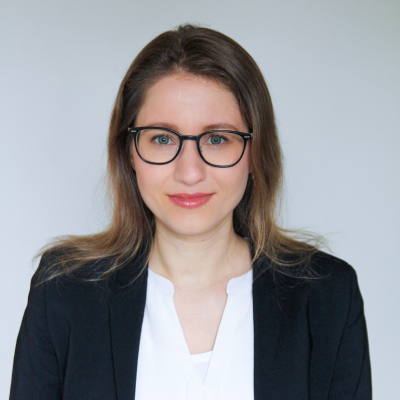
Franziska Lindner
Staff Specialist Quality Management System
Infineon Technologies
Franziska Lindner is a Quality Manager at Infineon Dresden and coordinating sustainability measures in the design and construction of the new 300mm Smart Power Fab to produce analog/mixed-signal technologies and power semiconductors needed in automotive and renewable energy industries.
After completing her Master of Science in biology 2014, Franziska Lindner started as scientific associate supporting international process transfers and cleanroom capacity expansion. As head of manufacturing and quality officer, she built up pharmaceutical clean room production processes from quality as well as production perspectives.

Theresa Seeholzer
PhD Candidate in Sustainable Electronics & LCA Researcher
Infineon Technologies / University of Freiburg - INATECH
Theresa Seeholzer is an Experimental Physicist and Sustainability Researcher at Infineon Technologies, where she develops 9R circular economy-guided Life Cycle Assessment frameworks for semiconductor-based devices. She is completing her PhD in Sustainable Systems Engineering at the University of Freiburg, investigating the environmental impact of smart point-of-care medical electronics through iterative LCA methodology.
She bridges semiconductor physics and sustainable product development, balancing functional performance, economic viability, and environmental impact in agile development cycles. For Theresa, lasting change in the semiconductor industry begins with the people behind the designs. When engineers across all levels and career stages understand sustainability as an empirical, measurable discipline, it becomes second nature, not an afterthought.
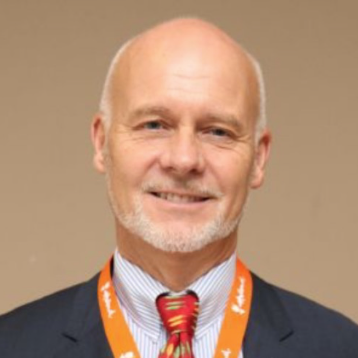
Eduard Hoeberichts
CEO and owner
FabMax
Active in the semiconductor industry since 1995 when I started working for ASML. From 2008 onwards as an independent innovator and investor. At ASML I had the opportunity to run the global 200mm operations completely for almost 10 years.
FabMax CEO and owner (2012 – ) Advanced lithography-based technology innovation for the semiconductor and related markets
FabMax CEO and owner (2012 – ) Advanced lithography-based technology innovation for the semiconductor and related markets
Founder and CEO of SandGrain (2016-22) Successfully developed a highly advanced sovereign European IOT Post Quantum ready end node authentication platform.
ASML Division President & SVP 97-2007 Special Applications & Member of ASML Executive Management Team. Responsible for complete business of 200mm products and markets worldwide. This ASML market approach was one of the first ones to include extensive life cycle extension investments – for a €10B product base. Company lead for the large €1.5B SVG acquisition (USA 2000).
SEMI Chip Traceability Steering Committee – 2025- present.
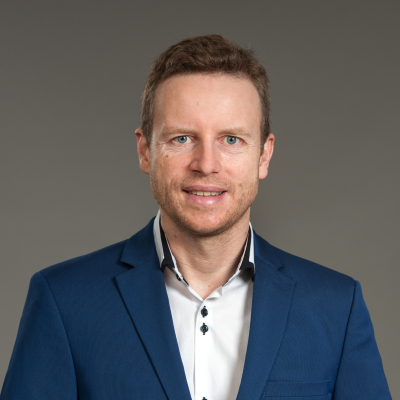
Dr. Thomas Bauer
AI Lead Manufacturing (Semiconductor)
ams OSRAM
Dr. Thomas Bauer works at ams OSRAM, where he focuses on the application of artificial intelligence in semiconductor manufacturing. His work centers on image‑based inspection, yield improvement, and the deployment of scalable AI solutions in high‑volume production environments.
He leads cross‑functional initiatives at the interface of manufacturing, automation, and data science, with the goal of translating AI methods into measurable operational and sustainability impact.
In this role, he drives the VisionIQ initiative, a unified AI vision approach designed to reduce scrap, improve yield, and enable more resource‑efficient semiconductor manufacturing.
Lisa Wagner
Process Development Engineer
Wacker
Dr. Lisa Wagner is a process development engineer in the chemical industry specializing in high-purity silicon processing and industrial etching technologies. She contributes to innovation projects with a focus on high-quality and sustainable manufacturing solutions.
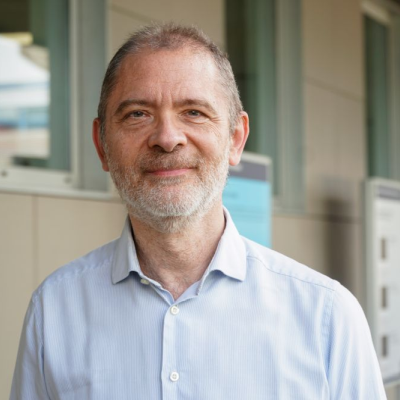
Luca Fontanella
Sustainability Champion
STMicroelectronics
Luca graduated in electronics engineering from Padua University. He joined STMicroelectronics (then SGS-Thomson) as a switched-mode power converter designer in 1995. In 2001, he began working for an internal startup dedicated to MEMS development, where he managed marketing and business management functions. When MEMS became established within ST, he focused on market promotion and internal and external communications related to MEMS products and technologies. In 2023, he took on a new role and became responsible for sustainability strategies and tactics for one of ST’s product groups. In this role, he focuses on new product development that minimizes environmental impact throughout the product life cycle and promotes well-being and inclusion policies. Luca is firmly convinced that we do not inherit the earth from previous generations; instead, we borrow it from future generations and must return it in the same condition as we received it. He also believes that everyone has the right to live peacefully and happily.
Payal Shah
CEO, Co-founder
PAVRTech
Payal Shah has spent her career doing one thing at different scales: using technology and data to solve seemingly impossible problems. She is an electronics engineer by training who moved into software and spent over 20 years inside the supply chains of giants like Coca-Cola, Warner Bros, Gillette, and Pitney Bowes.
She later led commercial growth at Cornerstone OnDemand, scaling its e-learning business from $50M to over $90M in revenue in just three years.
Today, as co-founder of PAVRTech, an agentic decision intelligence platform, she is turning that same operator's instinct toward one of the semiconductor industry's hardest problems: the emissions hiding in tier two and tier three of the supply chain, invisible to almost everyone who could actually act on them.
Payal holds an Executive MBA from UCLA Anderson, is an alumna of the Cambridge Institute for Sustainability Leadership, and is a Carbon13 founder. Her mission is simple: make sustainability a strategic advantage, not a reporting burden.
She later led commercial growth at Cornerstone OnDemand, scaling its e-learning business from $50M to over $90M in revenue in just three years.
Today, as co-founder of PAVRTech, an agentic decision intelligence platform, she is turning that same operator's instinct toward one of the semiconductor industry's hardest problems: the emissions hiding in tier two and tier three of the supply chain, invisible to almost everyone who could actually act on them.
Payal holds an Executive MBA from UCLA Anderson, is an alumna of the Cambridge Institute for Sustainability Leadership, and is a Carbon13 founder. Her mission is simple: make sustainability a strategic advantage, not a reporting burden.
Dr. Christoph Adelhelm
Business Development Manager
Plansee
Dr. Christoph Adelhelm is Business Development Manager at Plansee SE, supporting customer projects and new business models in the semiconductor industry with a focus on EUV technology. He joined Plansee in 2010 as Application Group Manager for sputtering targets, where he worked on innovative material solutions for solar thin‑film technologies. He studied chemistry at the Technical University of Munich and completed his PhD in 2008 at the Max Planck Institute for Plasma Physics, specializing in thin‑film research.
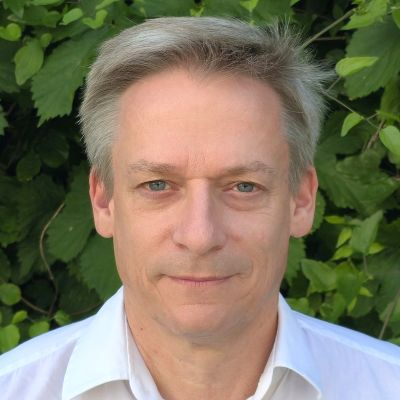
Prof. Dr. Henning Breuer
Innovation Consultant, Professor & Author
UXBerlin
Henning Breuer consults, researches, and teaches in the fields of innovation management and business psychology. He is the principal of UXBerlin – Innovation Consulting and Professor for Business and Media Psychology at Media University of Applied Sciences. Berlin.
Since 2001, Henning has worked with multinational corporations, SMEs, public organisations, and start-ups, providing consulting on sustainable innovation culture and business models, future scenarios, and ethnographic stakeholder research. Henning co-authored numerous journal and conference publications and books on Sustainable Innovation Cultures, Sustainable Business Model Design, Gamification for Innovators & Entrepreneurs and Values-Based Innovation Management. As a visiting researcher and professor, he has worked at the University of Chile (Santiago) and Waseda University (Tokyo). Before, he studied psychology, philosophy, and law in Berlin and Tübingen, and received his PhD in Psychology from the University of Magdeburg.
Dr. Wolfgang Nüchter
Director Sustainability Strategy Division Mobility Electronics
Bosch
Dr. Wolfgang Nüchter studied physics at the University of Stuttgart and earned his doctorate in materials science at the Max Planck Institute for Metal Research. After joining Bosch in research and advanced development, he held various line and project management positions. Since 2022, he has been responsible for the sustainability strategy in the Mobility Electronics business sector of Robert Bosch GmbH, which covers both the manufacturing of electronic control units and semiconductor devices (MEMS, IC, SiC). His focus is on the decarbonization of sites and products across the portfolio, as well as on organizational transformation.
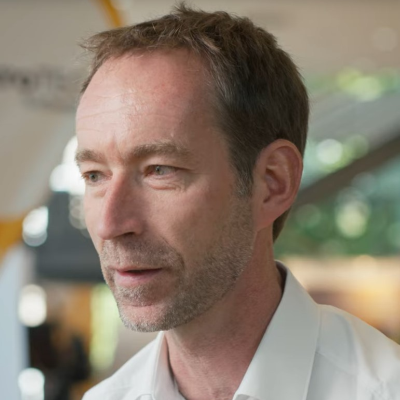
Richard Willems
Director R&D MCU
Swissbit AG
Richard Willems graduated in 2000 with a Diplom-Ingenieur degree from the Technical University of Cologne (TH Köln) and has since built more than 25 years of experience in the semiconductor industry, including eight years in ASIC development at Thomson Multimedia in Villingen-Schwenningen.
He has been with Hyperstone GmbH in Konstanz since 2008, part of Swissbit AG for the past five years. As Director Micro Controller Unit, he leads cross-functional teams focused on firmware and ASIC development, driving innovation in secure storage solutions and modern memory controller architectures. Beyond Swissbit, he leads the "Chip Design und Advanced Integration" working group within ChipConnect BW (CCBW), a network to bring together chip design activity across Baden-Württemberg, and is engaged in European funding initiatives such as IPCEI to strengthen European semiconductor sovereignty.
Sponsors
The SuSI Summit wouldn’t be the same without the generous support of our sponsors - their contribution helps elevate the experience and makes it all possible.

ams OSRAM
ams OSRAM develops advanced optical sensors, LEDs, and semiconductor solutions enabling sensing, illumination, and visualization technologies across automotive, industrial, medical, and consumer applications.
website
website

STMicroelectronics
STMicroelectronics designs and manufactures semiconductors, providing microcontrollers, sensors, power management, and analog chips for automotive, industrial, personal electronics, and IoT applications worldwide.
website
website

Wacker
Wacker Chemie AG produces specialty chemicals, silicones, polymers, and polysilicon materials used in construction, automotive, electronics, solar energy, and industrial manufacturing worldwide.
website
website

BOSCH
BOSCH develops sustainable technologies in mobility, energy efficiency, and industrial solutions, focusing on carbon reduction, electrification, and resource-efficient innovation.
website
website

Infineon
Infineon Technologies designs semiconductors for power electronics, automotive, industrial, and security applications, enabling energy efficiency, mobility, and secure connected systems worldwide.
website
website

Nokia
Nokia develops energy-efficient network and connectivity technologies that help reduce emissions, improve digital inclusion, and support more sustainable industries and infrastructure worldwide.
website
website

Swissbit
Swissbit develops secure industrial storage, cybersecurity, and IoT solutions designed for long product lifecycles, reliability, and resource efficiency. By extending device longevity and reducing replacement needs, it supports more sustainable digital infrastructure.
website
website
Cooperation partner
Bavarian Chips Alliance
The semiconductor network "Bavarian Chips Alliance" is part of the Bavarian Semiconductor Initiative of the State Ministry of Economic Affairs, Regional Development and Energy. It networks the semiconductor industry and consolidates Bavaria's position as a location for technology and innovation.
website
website

Join us for an informal networking evening with drinks and finger food. Connect with peers, exchange ideas, and enjoy conversations in a relaxed atmosphere. Secure your place by clicking the Networking event checkbox during the registration process.
Date & time
Tuesday 6 October from 18.00-21.00
Location
Infineon Technologies AG
Am Campeon
Building 15, “Look out”
85579 Neubiberg
Date & time
Tuesday 6 October from 18.00-21.00
Location
Infineon Technologies AG
Am Campeon
Building 15, “Look out”
85579 Neubiberg
Infineon Campeon
Neubiberg / Munich, Germany
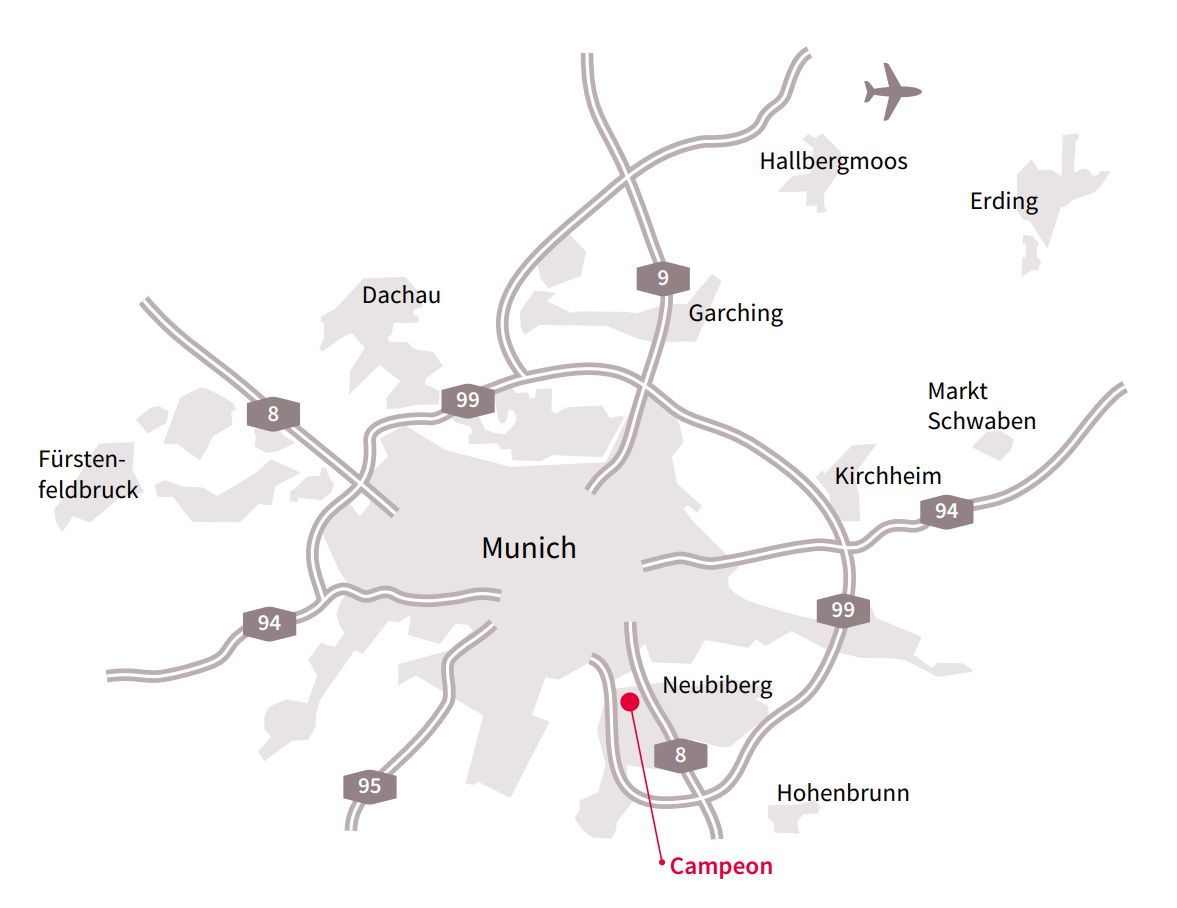
The SuSi Summit 2026 will take place at the Infineon Technologies Campus Munich.
Infineon Technologies AG – Neubiberg site (near Munich)
Am Campeon 1-15
85579 Neubiberg
Germany
Am Campeon 1-15
85579 Neubiberg
Germany
Networking event - Tuesday 6 October: Building 15, “Look out”
SuSI Summit - Wednesday 7 October: Building 9, “Kubus”
SuSI Summit - Wednesday 7 October: Building 9, “Kubus”
The campus serves as a hub for innovation, research, and collaboration, advancing semiconductor solutions for automotive, industrial, and energy-efficient technologies.
Access
Road
- A8 autobahn (highway), Exit 92b (Neubiberg), follow the signs to “Campeon”.
- At the “Campeon” roundabout take the second exit to the underground garage; registered visitors can contact the Reception via the button at the barrier and continue towards visitor parking (sign posted).
- Follow the signs to get from the underground garage to the Reception. Visitors who arrive by taxis can be dropped off in front of the Visitor Reception (Building 1) or at the Kubus Reception.
S-Bahn
- Take the S3 train (from the center of Munich towards Holzkirchen/Deisenhofen) to “Fasanenpark” station (please do not confuse this station with “Fasangarten” station).
- Then take the covered walkway to Building 1 / Visitor Reception (approx. 3 minutes).
Rail
- 19 minutes from Munich Hauptbahnhof or
- 9 minutes from Munich Ostbahnhof with the S3 train to “Fasanenpark” station (see above).
Bus
- Bus 199 From Neuperlach-Süd station (U5 and S7 trains) to either the “Campeon West” stop (KiTa) or the “Campeon” stop.
- Bus 220 From St.-Quirinplatz station (U1 train) to the “Fasanenpark” stop.
Air
- From Munich Airport, take the S8 local train (S-Bahn) to Ostbahnhof (runs every 20 minutes).
- Then switch to the S3 local train towards Holzkirchen. Exit at “Fasanenpark” station.
Registration
The SuSI Summit 2026 is designed as an exclusive and highly interactive experience, with a carefully limited number of participants to ensure meaningful exchange and collaboration.
While registration is free of charge, please note that submitting your registration does not automatically guarantee a ticket, unless you have received a personal invitation. This allows us to curate a diverse and inspiring group of attendees who will actively contribute to the summit experience.
After completing your registration, our team will review all submissions and inform you promptly whether a ticket can be allocated.
While registration is free of charge, please note that submitting your registration does not automatically guarantee a ticket, unless you have received a personal invitation. This allows us to curate a diverse and inspiring group of attendees who will actively contribute to the summit experience.
After completing your registration, our team will review all submissions and inform you promptly whether a ticket can be allocated.
Location
Infineon Technologies AG
Am Campeon
Building 9, “Kubus”
85579 Neubiberg
Am Campeon
Building 9, “Kubus”
85579 Neubiberg
DatEs
Networking event
Tuesday 6 October
SuSI Summit 2026
Wednesday 7 October 2026
Tuesday 6 October
SuSI Summit 2026
Wednesday 7 October 2026
Organizers


Contact the SuSI Summit team